AI in Utilities

Artificial intelligence helps utilities solve key operational problems. It improves energy storage management, strengthens grid resilience, forecasts demand, and supports renewable energy integration. These tools help utility companies respond to a fast-changing business environment with greater speed and accuracy.
The utility sector has long moved slowly, but data and algorithms are now driving major change. This article examines how artificial intelligence is reshaping the industry, what benefits it brings to companies and consumers, and what challenges stand in the way of fully intelligent infrastructure.


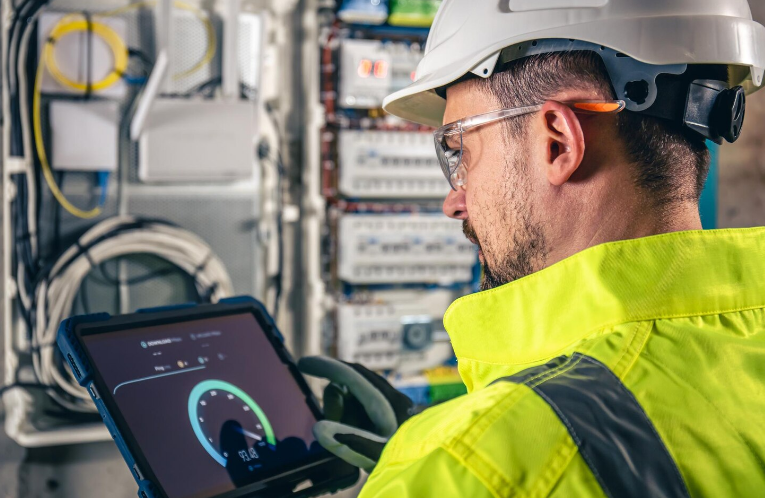
Benefits of AI in Utilities
Artificial intelligence gives utility companies capabilities that looked unrealistic just a decade ago. Real-time data analysis and automation cut costs, improve reliability, and raise service quality. The main benefits include the following.- Higher energy efficiency. AI models analyze customer behavior and grid conditions to reduce transmission losses. Smart grids can reroute energy flows through the most efficient path.
- Better customer service. AI chatbots and virtual assistants handle customer requests around the clock. Predictive analytics helps companies warn customers about possible outages and suggest ways to lower energy bills.
- Stronger grid management. AI helps operators balance loads in real time and reduce the risk of overloads and outages. The system can forecast peak demand and prepare resources in advance.
- Predictive asset maintenance. AI allows companies to move away from rigid maintenance schedules. Sensors and machine learning models detect early signs of transformer and equipment failure before breakdowns happen.
- More accurate failure forecasting. Utilities can replace reactive and time-based maintenance with predictive strategies. This extends asset life and lowers operating costs.
- Stronger cybersecurity. Utility networks belong to critical infrastructure. AI monitors digital control systems in real time, detects unusual activity, and identifies intrusion attempts faster than manual monitoring.
Challenges and Limitations of AI in Utilities
Artificial intelligence offers major potential in the utility sector, but adoption comes with serious obstacles. Utility companies must solve technical, legal, and organizational problems before they can build truly intelligent energy systems.- Data privacy and security. Smart meters and sensors collect large volumes of household energy data. That data can reveal daily routines and behavior patterns, so companies must protect it from breaches and unauthorized access.
- Integration with legacy infrastructure. Most power grids were built decades ago and cannot support instant data exchange. Companies must invest heavily in digital meters, sensors, and communication networks before AI can work at scale.
- Ethics and responsibility. AI can support critical operational decisions, including load balancing and shutdown scenarios. Companies and regulators still need clear rules on accountability, transparency, and decision control.
- High costs and uncertain return. Digitalization and AI deployment require large upfront investment. For smaller municipal utilities, those costs can be difficult to justify, especially when returns may take years to appear.
- Lack of skilled specialists. Utilities need experts who understand both energy systems and AI technologies. The market still lacks enough engineers and data specialists with that combined expertise.
- Regulatory barriers. The utility sector operates under strict regulation. In many cases, existing rules do not match the speed and autonomy of AI-based systems, which creates legal and compliance challenges.
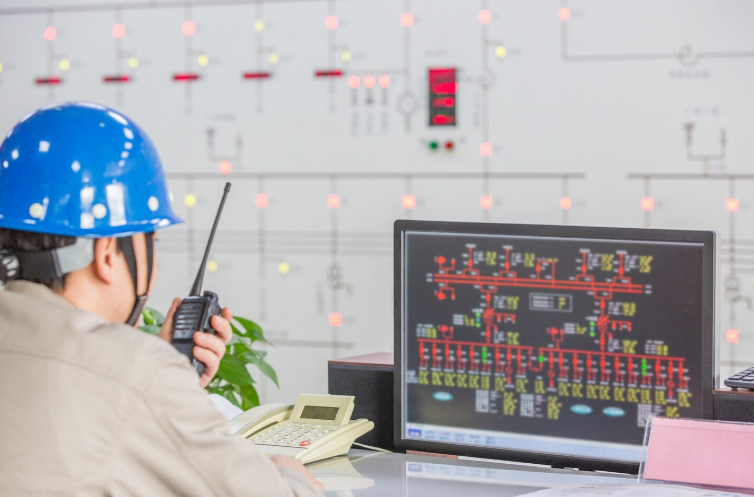
Examples of AI in utility operations
Artificial intelligence already supports daily utility operations in companies around the world. The examples below show where it delivers practical value.Demand forecasting and load management
Utilities no longer rely only on historical data and weather models. AI systems process a much wider set of variables, including event schedules, local behavior patterns, and industrial load shifts. This helps utilities predict demand more accurately and purchase or generate the right amount of power without unnecessary waste.Asset health monitoring and predictive maintenance
Utilities install vibration sensors, thermal cameras, and other monitoring devices on critical equipment. AI analyzes the data and detects patterns that signal early-stage faults. Maintenance teams can then repair assets before failures occur instead of replacing parts on a fixed schedule.Fault detection and outage management
When an outage happens, AI analyzes sensor data from across the network and identifies the likely fault location faster than manual dispatch methods. Some systems also isolate the damaged section automatically and reroute power through backup lines to restore service faster.Grid infrastructure monitoring
Utilities use drones, robots, and computer vision systems to inspect transmission and distribution infrastructure. These tools detect corrosion, vegetation growth, and physical damage more efficiently and with less risk than manual inspections.Water pipeline leak detection
Water utilities use AI to analyze data from acoustic and pressure sensors. The system detects small leaks that crews might otherwise miss, which helps reduce water loss and prevent damage to surrounding infrastructure.Voltage optimization
AI monitors grid conditions continuously and adjusts voltage levels across the network when needed. This helps utilities maintain stable power quality, stay within regulatory limits, and reduce energy losses during transmission.How is AI Used for Integrating Renewable Energy Sources?
Integrating variable renewable energy sources such as solar and wind remains one of the main challenges in modern energy systems. Their core limitation is intermittency: solar output drops at night, and wind generation changes with weather conditions. Artificial intelligence helps utilities manage this variability more effectively. First, AI improves weather and generation forecasting. Deep neural networks analyze satellite imagery, historical generation data, and weather reports to predict the output of solar and wind farms hours or days in advance. Grid operators use these forecasts to prepare balancing resources such as pumped-storage hydro and gas peaker plants. Second, AI controls energy storage systems such as batteries. Algorithms decide when to store excess renewable energy and when to send it back to the grid. They base these decisions on short-term generation forecasts, current demand, and real-time electricity prices. This makes renewable energy more stable, more reliable, and more practical at scale.